
Heartburn can be uncomfortable, distracting, and especially frustrating when it keeps coming back. If you are searching for home remedies for heartburn, you may be looking for simple, natural ways to reduce that burning sensation and improve your digestive comfort.
Occasional heartburn is common. It happens when stomach contents flow back into the esophagus, causing a burning feeling that can sometimes move upward toward the chest or throat. When reflux happens frequently or causes troublesome symptoms, it may be related to gastroesophageal reflux disease (GERD).
Fortunately, several lifestyle habits may help some people manage occasional reflux symptoms. These include changing meal timing, identifying personal trigger foods, avoiding lying down soon after eating, maintaining a healthy weight when appropriate, and improving nighttime sleeping habits.
This guide explores practical home remedies for heartburn and explains when persistent symptoms should be evaluated by a healthcare professional.
Medical disclaimer: This article is for educational purposes only and is not intended to diagnose, treat, or cure GERD or another medical condition. Talk with a qualified healthcare professional about persistent or severe heartburn.
 What Causes Heartburn?
Heartburn occurs when stomach contents move backward into the esophagus. The lower esophageal sphincter normally helps prevent this backward flow, but reflux can occur when this barrier relaxes or does not function properly.
Common symptoms may include:
- A burning sensation behind the breastbone
- Acid or food coming back into the throat
- An unpleasant taste in the mouth
- Chest discomfort
- Nausea
- Chronic cough or hoarseness in some people
- Difficulty or pain when swallowing
Occasional symptoms do not necessarily mean that you have GERD. However, frequent or persistent symptoms deserve medical attention.
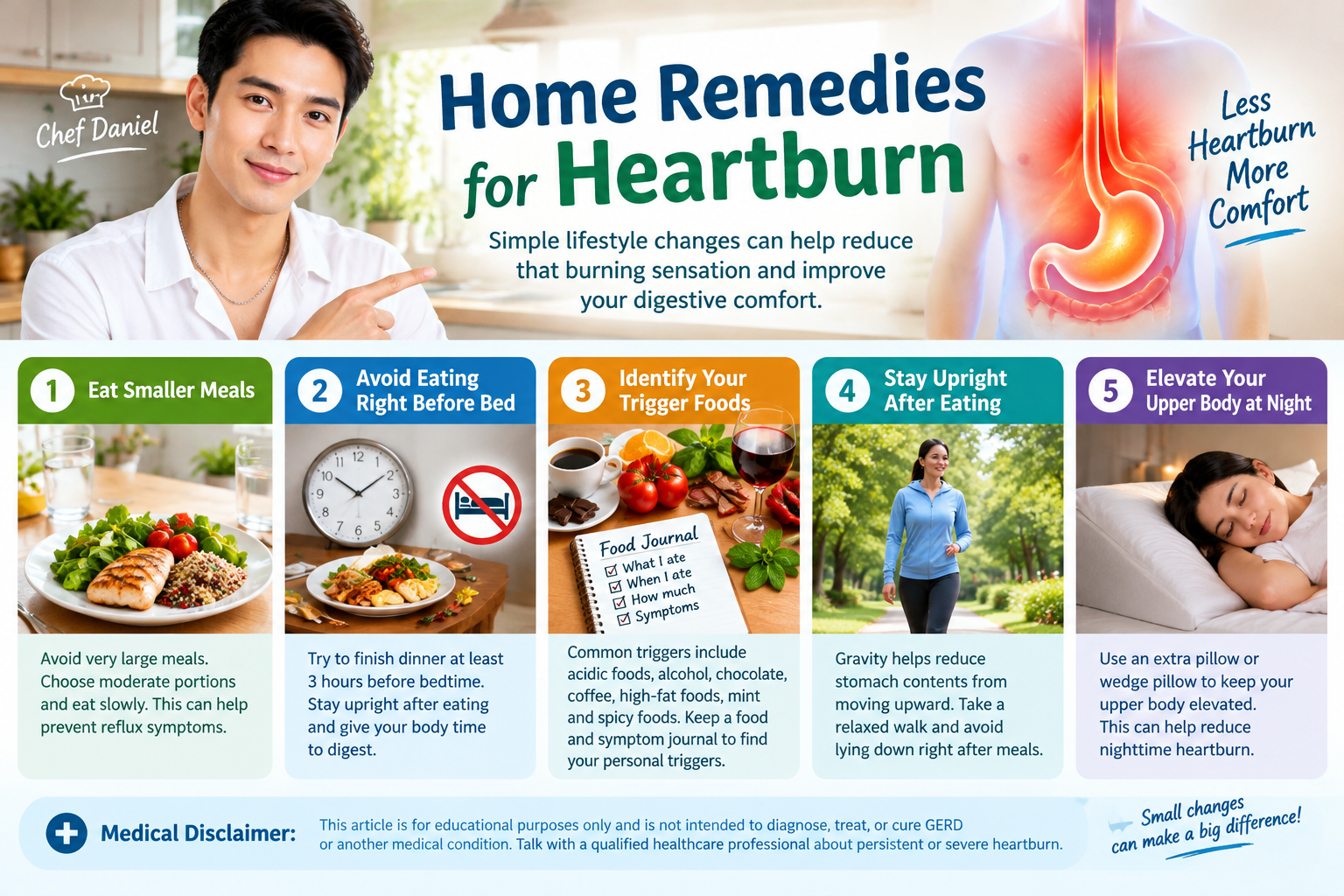
1. Eat Smaller Meals
One of the simplest home remedies for heartburn is to pay attention to meal size.
Very large meals may leave the stomach feeling overly full and can make reflux symptoms more noticeable in some people. Instead of regularly eating extremely large meals, consider choosing moderate portions and eating slowly.
You can also pay attention to how your body responds after meals. If you consistently notice heartburn after eating a large dinner, reducing the portion may be worth trying.
The goal is not to follow an extreme diet. It is to develop eating habits that are comfortable and sustainable.
2. Avoid Eating Right Before Bed
Meal timing can make a significant difference for people who experience nighttime heartburn.
NIDDK notes that people with GERD symptoms at night or while lying down may benefit from eating at least three hours before lying down or going to bed.
For example, if you normally go to bed at 10:30 p.m., finishing dinner earlier may give your digestive system more time before you lie down.
This is one of the easiest lifestyle changes to test because it does not require special products or supplements.
Try This Simple Routine
- Have dinner earlier when possible.
- Avoid large meals late at night.
- Stay upright after eating.
- Give yourself several hours between dinner and bedtime.
If nighttime heartburn continues despite these changes, discuss it with your healthcare provider.
 3. Identify Your Personal Trigger Foods
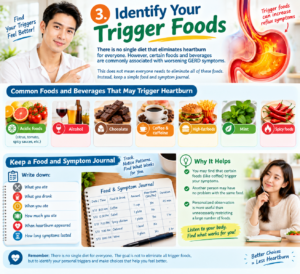
Another useful approach is discovering which foods actually trigger your symptoms.
There is no single diet that eliminates heartburn for everyone. However, NIDDK lists several foods and beverages that are commonly associated with worsening GERD symptoms, including acidic foods, alcohol, chocolate, coffee and other sources of caffeine, high-fat foods, mint, and spicy foods.
This does not mean everyone needs to eliminate all of these foods.
Instead, keep a simple food and symptom journal.
Write down:
- What you ate
- What you drank
- When you ate
- How much you ate
- When heartburn appeared
- How long symptoms lasted
After several days or weeks, you may notice a pattern.
For example, you might discover that coffee triggers your symptoms while another person has no problem drinking it. Personalized observation can be more useful than unnecessarily restricting a large number of foods.
4. Stay Upright After Eating
Gravity can help reduce the amount of stomach contents moving upward after a meal.
Rather than immediately lying down after eating, try to remain upright. A relaxed walk can also be a practical way to stay upright after a meal, provided you feel comfortable.
The American College of Gastroenterology includes avoiding meals close to bedtime and changing eating and sleeping habits among lifestyle measures for reflux management.
If you frequently experience heartburn after reclining on the couch following dinner, changing this habit may be worth trying.
5. Consider Elevating Your Upper Body at Night
Nighttime heartburn can be particularly disruptive because symptoms may interfere with sleep.
For people who experience reflux while lying down, elevating the upper body during sleep may help. NIDDK describes raising the head and upper back by approximately 6 to 8 inches as one possible lifestyle measure.
A purpose-designed wedge can provide a more consistent incline than simply stacking several pillows.
The American College of Gastroenterology also recommends head-of-bed elevation for people with nighttime GERD symptoms.
If you regularly wake up because of reflux, however, do not rely solely on home remedies. Persistent nighttime symptoms should be discussed with a healthcare professional.
6. Maintain a Healthy Weight When Appropriate
Weight management may also play a role in reducing reflux symptoms for people who are overweight or have obesity.
NIDDK notes that a doctor may recommend weight loss to reduce GERD symptoms in people who are overweight or have obesity. The American College of Gastroenterology similarly recommends weight loss for overweight or obese patients with GERD.
The healthiest approach is gradual and sustainable.
Rather than following an extreme diet, focus on balanced nutrition, appropriate portions, regular physical activity, and habits that you can maintain over time.
If weight management is relevant to you, a doctor or registered dietitian can help develop an appropriate plan.
7. Avoid Smoking
Smoking can contribute to reflux and is associated with a number of serious health risks.
The American College of Gastroenterology recommends avoiding tobacco products as part of lifestyle management for GERD.
If you smoke, quitting can provide health benefits that extend far beyond heartburn.
If you are having difficulty quitting, talk with a healthcare professional about appropriate support.
8. Limit Foods That Consistently Make Symptoms Worse
Rather than trying to avoid every food that has ever been associated with heartburn, focus on your own symptoms.
Common potential triggers include:
- Spicy foods
- Chocolate
- Coffee
- High-fat meals
- Mint
- Tomato-based foods
- Citrus foods
- Alcohol
NIDDK recommends talking with a doctor about foods or drinks that seem to increase your symptoms and trying dietary changes based on your individual response.
This approach can make a reflux-friendly diet easier to maintain.
9. Avoid Tight Clothing Around the Abdomen
Tight clothing around the waist may be uncomfortable for people experiencing reflux.
If you notice that tight belts, waistbands, or clothing seem to make your symptoms worse, choosing more comfortable clothing may be a simple adjustment.
The American College of Gastroenterology lists avoiding tight clothing among lifestyle considerations for people with reflux.
 10. Create a Daily Heartburn-Friendly Routine
The most useful home remedies for heartburn are often simple habits that you can repeat consistently.
A practical daily routine might look like this:
Morning:
Eat a balanced breakfast and notice whether coffee or another beverage triggers symptoms.
Afternoon:
Choose moderate portions and keep track of foods that seem to cause discomfort.
Evening:
Eat dinner several hours before bedtime and avoid very large meals.
After dinner:
Stay upright instead of immediately lying down.
Before bed:
If nighttime reflux is a problem, consider an appropriate upper-body elevation strategy.
These habits may not eliminate symptoms for everyone, but they can provide a practical starting point for managing occasional heartburn.
The Acid Reflux Strategy: An Additional Resource
If you are researching home remedies for heartburn, you may also want to explore educational resources that discuss different approaches to managing acid reflux.
The Acid Reflux Strategy is one resource you may wish to investigate. It should be considered an additional educational resource rather than a substitute for diagnosis or treatment from a healthcare professional.
Learn More About The Acid Reflux Strategy
If you would like to explore this resource, you can learn more here:
Discover The Acid Reflux Strategy
Disclosure: This article may contain affiliate links. If you purchase through a qualifying link, we may receive a commission at no additional cost to you.
Can Natural Home Remedies Cure Heartburn?
It is important to distinguish between managing symptoms and curing an underlying condition.
Some people may experience substantial improvement after changing their eating habits, meal timing, sleep habits, or other lifestyle factors. However, persistent GERD can require medical treatment.
NIDDK explains that treatment for GERD may include lifestyle changes, over-the-counter or prescription medicines, and, in some situations, surgery or other procedures.
Therefore, home remedies should not be used as a reason to delay medical evaluation when symptoms are persistent.
When Should You See a Doctor?
Occasional mild heartburn may be manageable with lifestyle changes. However, you should talk with a healthcare professional if symptoms are frequent, persistent, or not improving.
You should seek medical attention for warning signs such as:
- Difficulty swallowing
- Painful swallowing
- Persistent vomiting
- Unexplained weight loss
- Vomiting blood
- Black or tarry stools
- Significant chest pain
These symptoms can indicate a more serious problem and should not simply be treated with home remedies.
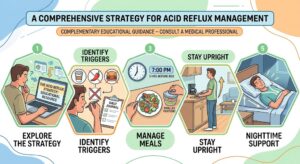 The Acid Reflux Strategy for People Looking for More Information
For people who have already tried changing their diet and daily habits, additional educational material may help them understand different approaches to reflux management.
The Acid Reflux Strategy may be useful for readers who want to explore another resource.
Explore The Acid Reflux Strategy
Learn More About The Acid Reflux Strategy
Remember that an affiliate product should complement, not replace, professional medical advice.
Frequently Asked Questions About Home Remedies for Heartburn
What are the best home remedies for heartburn?
Helpful lifestyle strategies may include avoiding personal trigger foods, eating smaller meals, avoiding food close to bedtime, staying upright after meals, and elevating the upper body during sleep when nighttime reflux occurs.
What can I do for heartburn at night?
Try finishing your evening meal at least three hours before going to bed and consider elevating your upper body during sleep. These measures may help people who experience nighttime reflux.
Should I avoid coffee if I have heartburn?
Coffee and caffeine are commonly associated with GERD symptoms, but individual responses vary. If you notice that coffee consistently triggers your symptoms, reducing or avoiding it may be worth discussing with your healthcare professional.
Can changing my diet stop heartburn?
Dietary changes may reduce symptoms for some people, particularly when they focus on personal trigger foods and meal timing. However, diet alone may not be sufficient for everyone with GERD.
Are home remedies enough for GERD?
Not always. People with frequent or persistent reflux may require medical evaluation and treatment. Home remedies are best considered part of an overall symptom-management strategy rather than a guaranteed cure.
Final Thoughts
Finding effective home remedies for heartburn does not necessarily mean searching for one magic food or drink. For many people, the most practical approach involves several small lifestyle changes working together.
Start by identifying your personal trigger foods, avoiding large meals close to bedtime, staying upright after eating, and considering upper-body elevation if nighttime symptoms occur. Maintaining a healthy weight when appropriate and avoiding smoking can also be important parts of reflux management.
If heartburn keeps returning, becomes severe, or occurs alongside warning signs, speak with a healthcare professional.
For readers who want additional information, The Acid Reflux Strategy can be explored as an educational resource alongside evidence-based medical guidance.